

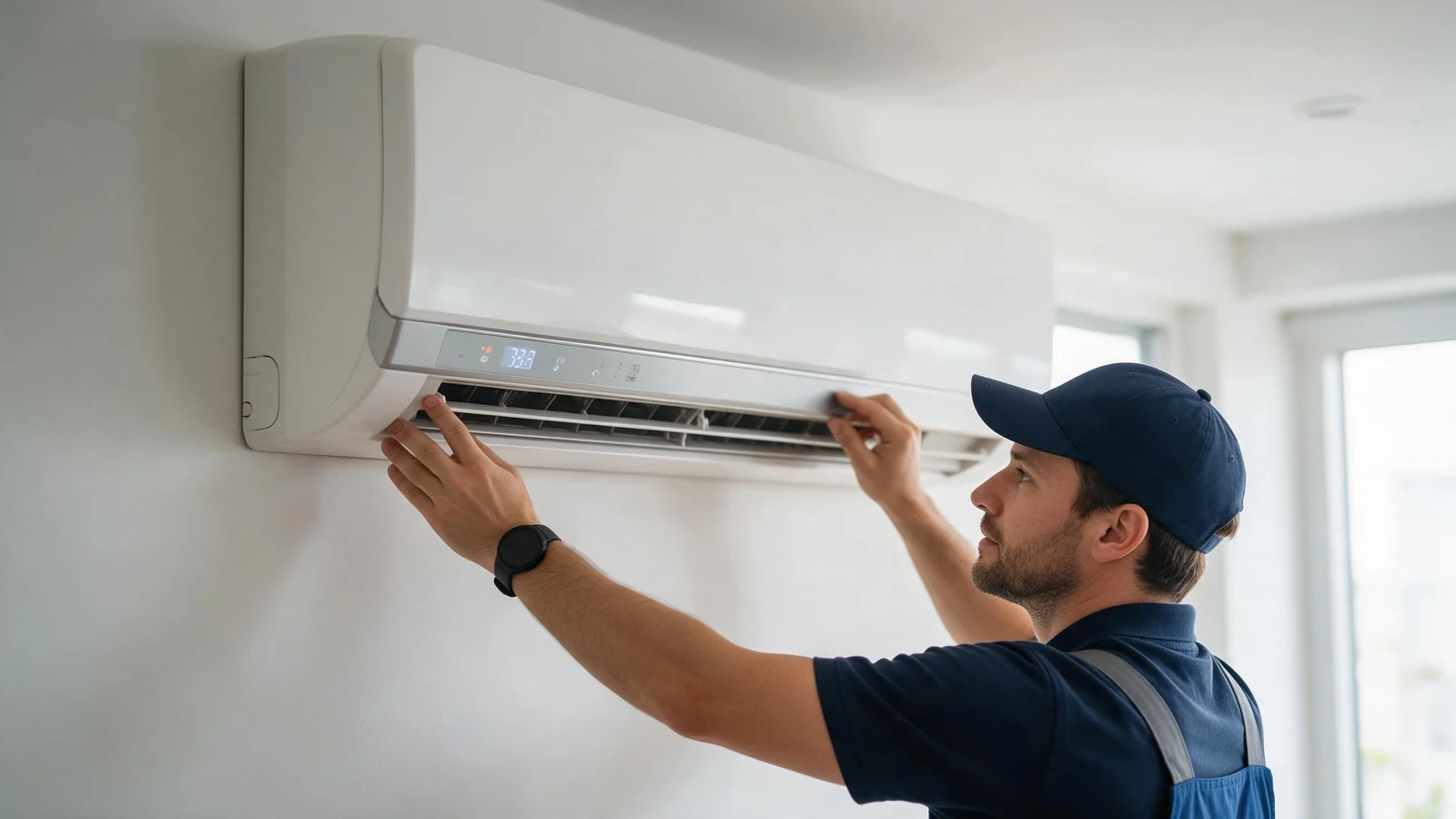
LG appliance repair in Los Angeles
Why Is My LG Air Conditioner Freezing Up?. Full Los Angeles troubleshooting guide with likely causes, safe checks, related LG codes, diagnostic clues, and whe
Ice on an LG air conditioner points to low airflow, sensor or control behavior, operating conditions, or a refrigerant-side problem. Turn the unit off and let the ice melt before you book a visit.
A detailed Los Angeles guide to LG air conditioner freezing up, including safe owner checks, common causes, model-specific diagnostic context, related error codes, and repair next steps.
The phrase “LG air conditioner freezing up” can describe several different failures that look similar from the outside. Ice on an indoor coil or refrigerant line means the coil surface has fallen below freezing while moisture is present. The reason can be low airflow, sensor/control behavior, operating conditions, or a refrigeration-circuit problem. That is why this guide starts with observable conditions and safe checks, then moves toward professional diagnosis.
This article is written for an LG appliance repair website. Use the exact owner documentation for your model when it gives model-specific instructions that differ from general guidance here.
Before troubleshooting LG air conditioner freezing up, write down what changed, when it happens, and whether the appliance finishes any part of its normal operation. A precise description is more useful than saying the unit is simply “broken.” Include the complete model number when accessible and photograph the display if a code appears.
Useful details include whether the problem is constant or intermittent, whether it starts after warm-up or after a particular stage, whether a reset changes anything, and whether another function still works normally. Those comparisons help separate a shared power/control problem from a fault limited to one subsystem.
Low airflow lets the evaporator get colder than intended and is one of the simplest conditions to check. This possibility matters because the visible symptom can occur before the control has enough information to identify one failed part. On LG room air conditioners and supported split systems, the exact test path depends on the model and on when the symptom appears.
A fan that runs slowly or intermittently reduces heat transfer across the coil. This possibility matters because the visible symptom can occur before the control has enough information to identify one failed part. On LG room air conditioners and supported split systems, the exact test path depends on the model and on when the symptom appears.
Dirt on the evaporator can restrict air and insulate the heat-transfer surface. This possibility matters because the visible symptom can occur before the control has enough information to identify one failed part. On LG room air conditioners and supported split systems, the exact test path depends on the model and on when the symptom appears.
Some room AC units can ice when used outside their intended temperature range. This possibility matters because the visible symptom can occur before the control has enough information to identify one failed part. On LG room air conditioners and supported split systems, the exact test path depends on the model and on when the symptom appears.
Incorrect pipe or room temperature feedback can allow operation outside the expected control window. This possibility matters because the visible symptom can occur before the control has enough information to identify one failed part. On LG room air conditioners and supported split systems, the exact test path depends on the model and on when the symptom appears.
Low charge, restriction, or other sealed-system issues can lower evaporator pressure/temperature and require professional testing. This possibility matters because the visible symptom can occur before the control has enough information to identify one failed part. On LG room air conditioners and supported split systems, the exact test path depends on the model and on when the symptom appears.
Look at the filter and the vents for blockage, and note where the ice forms and how quickly it returns after thawing.
These steps are limited to normal owner-level observations. If any step would require removing service panels, accessing live wiring, opening a gas system, working on a sealed refrigerant circuit, or bypassing a safety device, stop and move to professional diagnosis.
After the checks, run only one normal test when the appliance is safe to operate. If the same condition immediately returns, repeated resets usually add less information than preserving the code, sound, timing, and operating state for diagnosis.
A related code can narrow the investigation, but code meaning must stay inside the correct product family. Do not buy a part from the code alone. Depending on the exact model, useful codes or display conditions may include:
Stop using the air conditioner for burning odor, visible electrical damage, repeated breaker trips, water entering electrical areas, or severe icing accompanied by abnormal operation. Refrigerant handling, live electrical testing, and internal inverter work are professional procedures.
Safety symptoms override convenience. If the unit is creating a water, fire, electrical, gas, high-voltage, or refrigerant hazard, leave it off until the condition can be evaluated safely.
Professional AC diagnosis may include filter and coil condition, indoor and outdoor airflow, fan operation, condensate drainage, thermistors, communication wiring, inverter/control behavior, refrigerant-side temperatures and pressures, and model-specific stored codes. The same “not cooling” complaint can originate in airflow, drainage, sensors, electronics, or the refrigeration circuit.
A good service decision follows the measurements. The technician should be able to explain which operating result was abnormal, what tests isolated the cause, and why the proposed component or repair addresses that result. Replacing the most commonly discussed part without confirming the failure can waste time and leave the original problem unresolved.
Los Angeles cooling loads can be high during hot weather, but persistent icing, communication errors, weak airflow, or indoor leakage are not solved by simply lowering the setpoint. Installation type and outdoor-unit access matter for service planning.
The service address is also important because the site is being rebuilt around Los Angeles and Orange County local pages. Use the location page that matches the actual property rather than adding unrelated city names to the repair request.
One normal power reset can be reasonable when there is no safety issue and the owner instructions allow it. Record the code and symptom first. If the same problem returns, stop using repeated resets as a substitute for diagnosis.
Usually not by itself. A code identifies a monitored condition or failed operating result. The model, symptom, wiring, installation, and measurements are needed to confirm the failed component.
Yes. Water flow, drainage, venting, airflow, electrical supply, loading, door sealing, and other external conditions can produce symptoms that resemble an internal component failure.
Include the LG appliance type, complete model number when available, exact symptom, any displayed code, when the problem occurs, and the Los Angeles or Orange County service address. Add access details that may affect the visit.
If the same symptom returns after the safe checks above, send the model number, code, and a short description of the behavior with your service request. A model-specific diagnosis is more reliable than replacing a part from the symptom alone.
Share a few details and we’ll confirm an appointment. Prefer to talk? Call us and we’ll help right away.
Fields marked with * are required.